
What your shop window should answer in five seconds
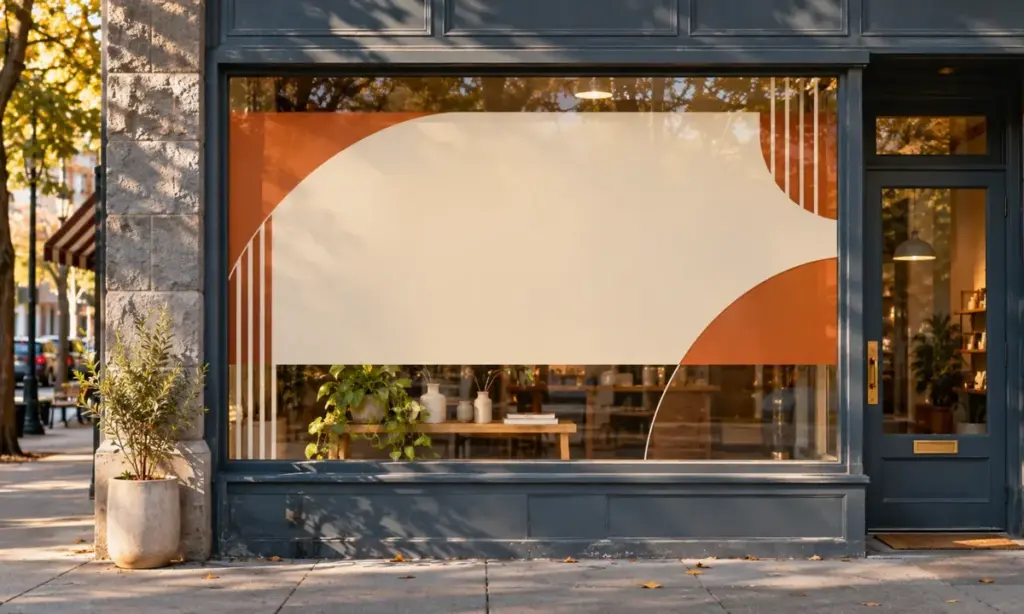
A pedestrian has a few seconds to decide whether to cross the pavement and open the door. Read your front window from that distance. Its first job is to answer a small question about the visit, such as whether the shop can repair a zip or accepts items today.
Give the window one job to do first
Imagine a small alteration shop with a large logotype, a seasonal offer and a handwritten notice. A customer walking up with a torn coat needs to know whether repairs are offered and how to take the next step. “Coat and zip repairs” and “Bring the item to the counter for an estimate” answer those questions without asking them to interpret the name first.
Pick the line a person should read from the path. Give it room around the edges and check the sign against the real window. Reflections can make a very legible print proof hard to read. A temporary mockup in its intended spot will show whether the window frame, hanging display or glare obscures part of the sign.
Run a short street test
Stand where someone approaches from each direction. Look for five seconds, turn away and write what you remember. Ask somebody unfamiliar with the business to try it. See whether they can identify one service and what they would do next. If they can read two offers but miss the service, simplify the offer or move it close enough to the door for a slower look.
Take a phone photo from the same place at two times you are normally open. Check whether the sign appears in the beginning of the frame and whether smaller type disappears behind glare. A photograph can show placement and contrast, while an in-person walk verifies distance and timing.
Let the website confirm the trip
The home page or listing should confirm the same service, entrance and opening hours. Google’s Business Profile guidance asks businesses to present their names consistently with real-world signs and to use accurate address or service-area details. Keep the same identifiable name across the window and web. Place only the next useful detail where it fits. A pedestrian needs a reason to stop; the person planning a visit later may need the closing time and the route.